Canberra buys differently
Canberra isn’t a smaller Sydney. A big share of the city’s work runs through government, and around that sits a layer of consultancies, community organisations and specialists who sell to departments and agencies. Then there are the trades and service businesses that keep the region running, many of whom work on both sides of the ACT/NSW border without thinking twice about it.
Those are two different buyers, and a website for each has a different job. One is read carefully by someone building a shortlist. The other is skimmed on a phone by someone who needs a sparky this week.
Selling to departments and community organisations
When a department or community organisation looks for a consultant, the website gets checked before the first email. The reader is usually careful, often senior, and allergic to claims they can’t verify.
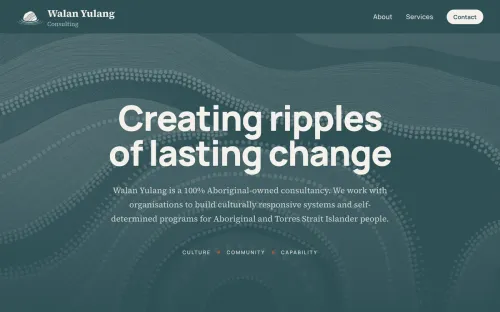
Walan Yulang Consulting is a 100% Aboriginal-owned consultancy in Canberra that helps organisations become more culturally responsive and build better programs for Aboriginal and Torres Strait Islander people. Its site needed to be taken seriously by exactly that audience. So the design is quiet and the copy is specific. The founder’s standing in Aboriginal health and youth mental health is stated with its sources, not as a sales line. The work is framed around three clear ideas, and getting in touch is simple from every page.
That approach suits most Canberra consultancies. Say what you do, show where your credibility comes from, and make the next step obvious. A formal buyer will trust that more than a hero banner full of adjectives.
Trades and consultants working across the border
The ACT/NSW border runs straight through plenty of service areas. A trade or consultancy based in Canberra will often take work in Queanbeyan and further into NSW, and a site that only says “Canberra” quietly turns those people away.
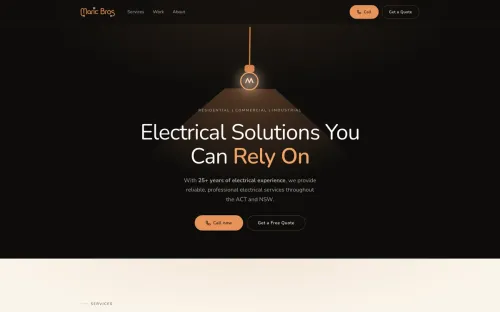
Maric Brothers Electrical is a family electrical business working across the ACT and NSW. Its reputation had been built over 25-plus years of word of mouth, but nothing online carried it. The site now catalogues work by sector (residential, commercial and industrial) with real project locations on each job, so a homeowner, a builder and a site manager each find work that looks like theirs.
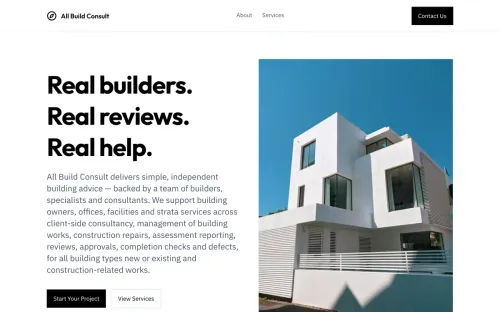
All Build Consult, an independent building consultancy covering NSW and the ACT, runs a paperless, online-only service. Its site follows the same structure on every service page: scope, process and what’s excluded. A strata or facilities manager on either side of the border can compare it without a phone call.
Local search in a city of districts
Canberra is laid out as districts with their own town centres, and people often search that way. “Electrician Belconnen” or “physio Gungahlin” is a different query from “electrician Canberra”, and a site that only mentions the city gives Google nothing to match the first one with.
The fix isn’t stuffing district names into a footer. It’s naming the districts you genuinely cover (Belconnen, Gungahlin, the Inner North and South, Woden, Tuggeranong) with something true about the work you do there. Then set up your Google Business Profile so its service area matches, including the NSW side if you cross the border. The profile drives the map results and the site does the work in the ordinary results underneath. They do different jobs, and they work better together.
How remote delivery works
I’m based in Sydney, not Canberra, and I’d rather say that up front. In practice it changes very little. Briefs, design reviews and feedback all happen over video calls and shared links, in the same timezone, and you deal with the person writing the code. If a project ever warrants meeting in person, Canberra is about a three-hour drive.
If you’re weighing up a remote freelancer against a local agency, this comparison covers the trade-offs honestly. If your current site is the problem rather than the lack of one, a redesign is usually the shorter path.