The sale is slow, so the site has to do the waiting
Construction doesn’t convert like a trade callout. Nobody finds a builder at 11pm and commits by midnight. A commercial fitout, a knockdown-rebuild or a consultancy engagement runs over weeks or months, involves several people, and gets discussed in rooms you’re not in.
That changes what a website is for. It isn’t a lead-capture form with a hero image in front of it. It’s the thing that keeps representing you between conversations. When the client’s business partner asks “who are these people”, when a strata committee circulates three options, when a procurement officer shortlists before anyone picks up a phone, the site is what’s in the room.
Which means the site’s job is to survive scrutiny, not to create urgency. Depth beats punch. A page that answers a sceptical question thoroughly is worth more than a page that pushes hard for a call.
Projects are the argument
Everything a construction business claims about quality, capability, scale and reliability is unverifiable in prose and obvious in a project page. Yet most construction sites keep completed work in a single gallery grid, two clicks deep, with no captions.
Given the same photos, a project page that names the scope, the constraints, the timeframe and the outcome does several jobs the gallery can’t. It gives a prospective client something specific to point at. It answers the “have you done anything like mine” question without a meeting. And it gives the site real content to rank with, because “commercial fitout [suburb]” has a page behind it instead of a lightbox.
Three construction sites, three different buyers
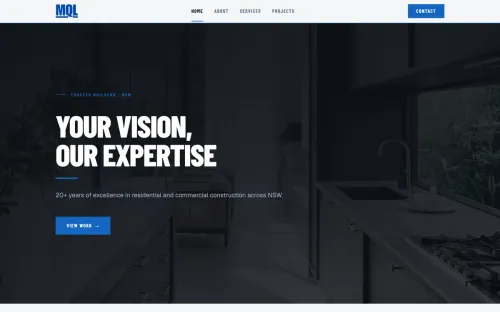
MQL Constructions, NSW. A construction company with 20 years behind it, getting most of its work from referrals. The old site gave a new contact no reason to trust the business before the first phone call. The rebuild puts experience and past work on every page instead of a single about page, and groups projects by type so a visitor can find something comparable to their own job. It’s hand-coded to load fast on the job-site mobile connections MQL’s own clients browse from, and it now brings in enquiries directly rather than leaning entirely on word of mouth.
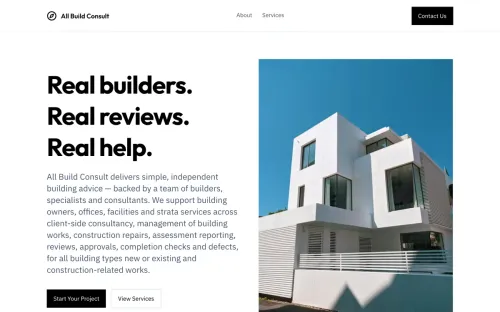
All Build Consult, NSW and ACT. An independent building consultancy, not a builder. Its clients are building owners, offices, facilities managers and strata managers who arrive with a stressful problem and need to trust the advice, so the site reads as precise rather than promotional. Every service page follows the same spec-sheet structure (scope, process, what’s excluded), which lets a strata manager comparing consultants find the answer without phoning around. The enquiry form is the only call to action, matching the paperless, consultation-first way the business works.
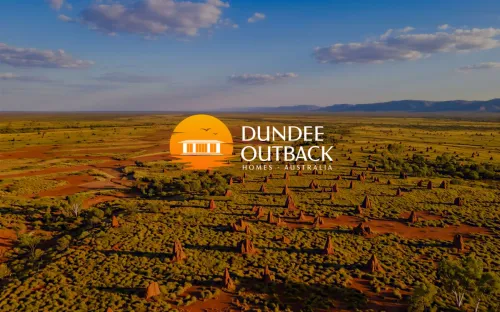
Dundee Outback Homes, Northern Territory. A modular home and remote-camp accommodation builder selling one catalogue of steel-framed builds to two very different buyers: first-home owners and industrial site managers. Every model has its own page with a price-from tag, wind rating and floor-plan gallery, in a plainspoken “built for the Territory” tone, and an NT grant-eligibility check leads into the enquiry form. Both buyers can compare builds and self-qualify before they ever get in touch.
Writing for more than one kind of buyer
This is the trap most construction sites fall into. A homeowner planning an extension and a facilities manager issuing a tender arrive with completely different questions, different vocabulary, and different definitions of risk. Written for the average of the two, the site speaks properly to neither. A homeowner finds it cold and jargon-heavy, and a procurement officer finds it vague and consumer-grade.
The answer isn’t a compromise tone. It’s separate paths. Residential work and commercial work get their own sections, each written the way that buyer actually thinks, and the homepage simply asks which one someone is. That’s a structural decision, and it’s much cheaper to make before the build than after.
Referrals still check you online
Plenty of construction businesses run almost entirely on word of mouth and conclude a website doesn’t matter much. It’s the opposite. A referral is the most valuable lead you get, and it will almost always look you up before making contact.
At that moment the site either confirms what they were told or quietly undercuts it. A recommendation described as “the best builder we’ve worked with”, followed by a site that looks thinner than a sole trader’s, creates a doubt that wasn’t there a minute earlier. The site doesn’t have to generate a single cold lead to earn its cost. Protecting the referrals you already get is enough.
If your work is closer to callouts than projects, the tradie web design page is the better fit. For builders working across the ACT and regional NSW, see Canberra web design, and for Sydney-specific local search, the Sydney web design page.