A clinic website has two readers
The first is a prospective patient, usually on a phone, often anxious or in pain, and comparing you with two or three other clinics. They want to know what you treat, whether you’re qualified, where you are and how to book. Anything that makes them work harder sends them back to the search results.
The second reader is less obvious: the rules. Health advertising in Australia is regulated, and your website counts as advertising. A good clinic site has to persuade the first reader without tripping over the second.
What health advertising rules mean for your site
If you’re a registered health practitioner (doctors, physiotherapists, psychologists, chiropractors and dentists among them), your website falls under AHPRA’s advertising guidelines. In practice that rules out a few things clinic sites commonly do. Testimonials about the clinical side of care can’t be used. Claims can’t be misleading or create unreasonable expectations of a good outcome. And the site shouldn’t encourage people to use services they don’t need. Cosmetic procedures have their own, stricter guidance on top of that.
None of this stops a site from being persuasive. It just moves the persuading onto things that are true and checkable: qualifications, memberships, experience, and plain explanations of what a treatment involves and who it suits.
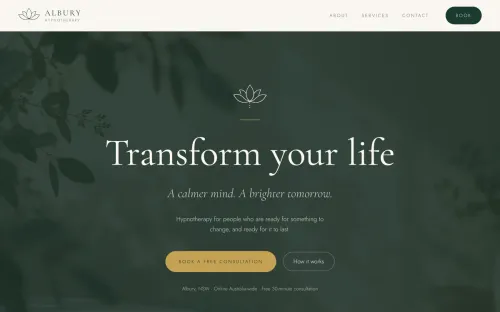
Practitioners outside AHPRA’s scope aren’t off the hook either, because consumer law still applies to everyone. Albury Hypnotherapy is a good example. The old site leaned on a success-rate figure that couldn’t be backed up. The rebuild dropped it and led with the practitioner’s professional accreditations instead, alongside a straightforward explanation of what clinical hypnotherapy is and isn’t. It reads as more trustworthy, not less.
I’ll write with these rules in mind and flag anything that looks risky, but you’re the one accountable for your advertising, so it’s worth checking anything borderline with AHPRA or your professional association.
Booking should be the easy part
Most clinics already pay for a booking system. The website’s job is to get patients into it with as little friction as possible, from any page, on a phone.
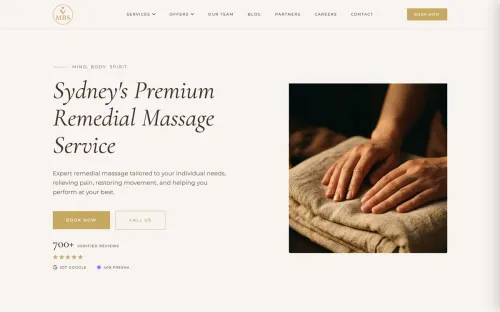
At MBS Remedial Massage, online booking is the clear next step on every page, and treatment types and prices sit on the page instead of in a PDF brochure. A patient who would otherwise ring to ask about prices can see them and book. For Albury Hypnotherapy, services and session prices are pulled from the booking system when the site builds, so a price change in the calendar flows through to the website without anyone editing it twice.
Trust is built before the first appointment
Patients choosing a specialist compare carefully. Dr Joseph Rizk, a plastic surgeon in Double Bay, needed a site that carried the weight of a consultation. Procedure pages are organised by concern, the way patients actually research, with recovery information close to the consultation form. Patients now arrive already familiar with the practice and its approach.
That’s the pattern for most clinics. Show the people, their qualifications and how they work. Explain treatments in plain language. Make the next step obvious.
Privacy starts with the enquiry form
A contact form on a clinic site invites people to share health information, often more than you need. The simplest protection is design: ask for contact details and a general reason for getting in touch, and keep clinical detail for your practice management or booking system. Health information is sensitive information under Australian privacy law, so it’s worth reading the OAIC’s guidance for health providers alongside your site build.
Near-me searches happen on phones
“Physio near me” and “massage near me” are phone searches, made by someone who wants an appointment soon. Your Google Business Profile does most of the work in the map results. The site backs it up with your suburb, hours, parking and a tappable number above the fold, on a page that loads quickly on mobile data. There’s more on why that matters in why hand-coded sites rank better, and if you’re tempted by a template, this comparison with Wix and Squarespace is worth reading first.