One site, three kinds of customer
Electrical work is a good example of why a trade site can’t be generic. The same business might wire a granny flat on Monday, fit out a shop on Wednesday and work on an industrial site on Friday. Those are three different buyers, with different questions and different ideas of what makes an electrician trustworthy.
The homeowner wants to know you’ll turn up when you say, explain the job in plain words and not leave a mess. The builder wants proof you can handle a development of their size and keep to their program. The site manager wants to know you’ve done industrial work before and hold the right tickets. Put all three on one page of bullet points and none of them finds what they came for.
The fix is structure, not more words. Separate paths for residential, commercial and industrial work, each showing jobs that look like the visitor’s own. Then the same two actions on every page: call now, or ask for a quote.
What we built for Maric Brothers Electrical
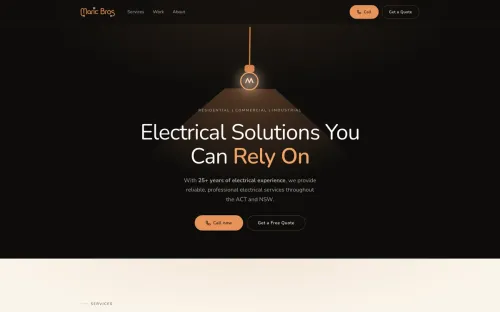
Maric Brothers Electrical is a family business with more than 25 years in the trade, working across the ACT and NSW. Their reputation travelled by word of mouth, but nothing online carried it, so every new enquiry started with a cold phone call.
Past work on the new site is catalogued by sector, so a homeowner, a developer and a site manager each land on jobs like their own. Every job page carries the real project location instead of a stock caption. Click-to-call and a free quote request sit side by side in the header and footer of every page, and the site is built to load quickly on the job-site mobile connections builders browse from. The family history that used to be explained on the phone now does its work before anyone dials.
A page for every job you want more of
Most electrician websites list their services as bullets on one page: switchboards, lighting, power points, EV chargers, solar. That’s a ranking problem. Someone searching “switchboard upgrade [suburb]” or “EV charger installer near me” needs a page that’s about exactly that, and a bullet point can’t be one.
Give each job type you actually want more of its own page, with what’s involved, the questions people ask, and photos of your own work, and the site gets several front doors instead of one. It’s also where newer work lives: EV chargers, batteries and solar are searches that barely existed a few years ago, and plenty of electricians’ sites still don’t mention them.
Licence, insurance and reviews, where people decide
Someone letting a stranger work on their switchboard is looking for reasons to trust them. Your licence number, your insurance and your Google reviews are those reasons, so they belong near the phone number and on every job page, not tucked into the footer.
Reviews matter twice. They help people choose you, and they help you show up in the map results in the first place. Most happy customers will leave one, they just never get asked. That’s why the Organic Growth System sends a review request after every job, alongside missed-call text back so the calls you can’t answer from a ceiling still get a reply in seconds.
Built to load on a site connection
A lot of electrical searches happen on a phone: a homeowner whose power just tripped, a builder on a slab checking who to call. A page-builder site with a dozen plugins can take several seconds to load on mobile data, and that’s long enough for them to tap the next result. A hand-coded site loads fast because there’s nothing on it that doesn’t need to be there, which is also part of what helps it rank.