Fifty jobs, one website
A handyman or maintenance business does more kinds of work than almost any other trade. In one week you might hang doors, replace a tap washer, fix a fence, assemble a wardrobe, clean gutters and patch a wall. That range is the whole appeal: one person who can sort out the list.
On a website, though, that range becomes a problem. Most handyman sites deal with it by listing everything on one page, a long block of bullet points that nobody reads. A visitor looking for someone to fix a sagging gate has to scan forty items to find theirs, and Google sees one page trying to be about everything, so it ranks for nothing in particular.
The fix is structure. A handful of clear categories, with the jobs people search for most each getting their own short page: what the job usually involves, roughly what affects the price, and how to book it. Every one of those pages is a separate way to be found for “[job] [suburb]”, and a maintenance business has more of those searches than nearly any other trade.
Make small jobs easy to book
Small jobs are the bread and butter of maintenance work, but they don’t justify much admin. A ten-minute phone call to book a half-hour job, then another to confirm the price, eats into a job that was never big to begin with.
A short booking or quote form fixes that. The customer describes the job, adds a couple of photos and picks a rough time; you price it from the photos between other jobs and reply. No phone tag. For customers who would rather call, the number is still one tap away on every page, and a missed call gets an automatic text back so it doesn’t turn into a lost job.
Landlords and property managers
Rental properties need a steady stream of small repairs, and property managers are always looking for a maintenance contact who turns up, deals politely with tenants and sends photos and an invoice without being chased. Win one property manager’s trust and the work comes back week after week.
A page written for them says how you work with rentals: how they book jobs, how you arrange access with tenants, how quickly you usually respond, and how you report back. It’s the kind of page most maintenance sites don’t have, and it speaks to some of the most valuable regular customers in the trade.
Turning one-off jobs into regulars
The handyman business that grows is the one people ring again. Someone whose door you fixed last month has a fence that needs work this month. If they remember your name, they call you; if they don’t, they search Google and find someone else.
A Google review request after every job does two things at once: it builds the reviews that lift you in the map results, and it reminds the customer who you are while the good job is fresh. It’s part of the Organic Growth System, along with missed-call text back and a Google Business Profile tune-up.
What we built for Promax Maintenance
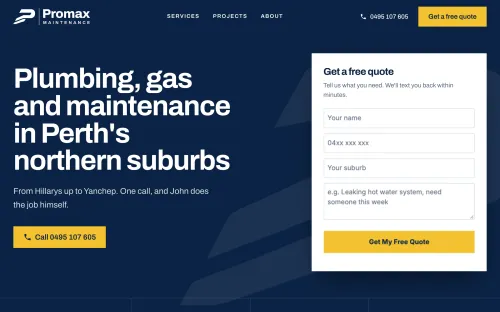
Promax Maintenance is John’s plumbing, gas and maintenance business in Perth’s northern suburbs. The site gives each service its own page, from plumbing installations, repairs, blocked drains, hot water and gas fitting to reticulation and home maintenance, and each main suburb has its own page with real local detail. Missed calls get an automatic text back and quote requests get a reply by text within minutes. Promax runs on the Organic Growth System.
More on trade sites generally on the tradie web design page.